Choosing an air purifier for your room: which numbers actually matter
What CADR and the coverage figure on the box really tell you — and why a more powerful unit is not always better.
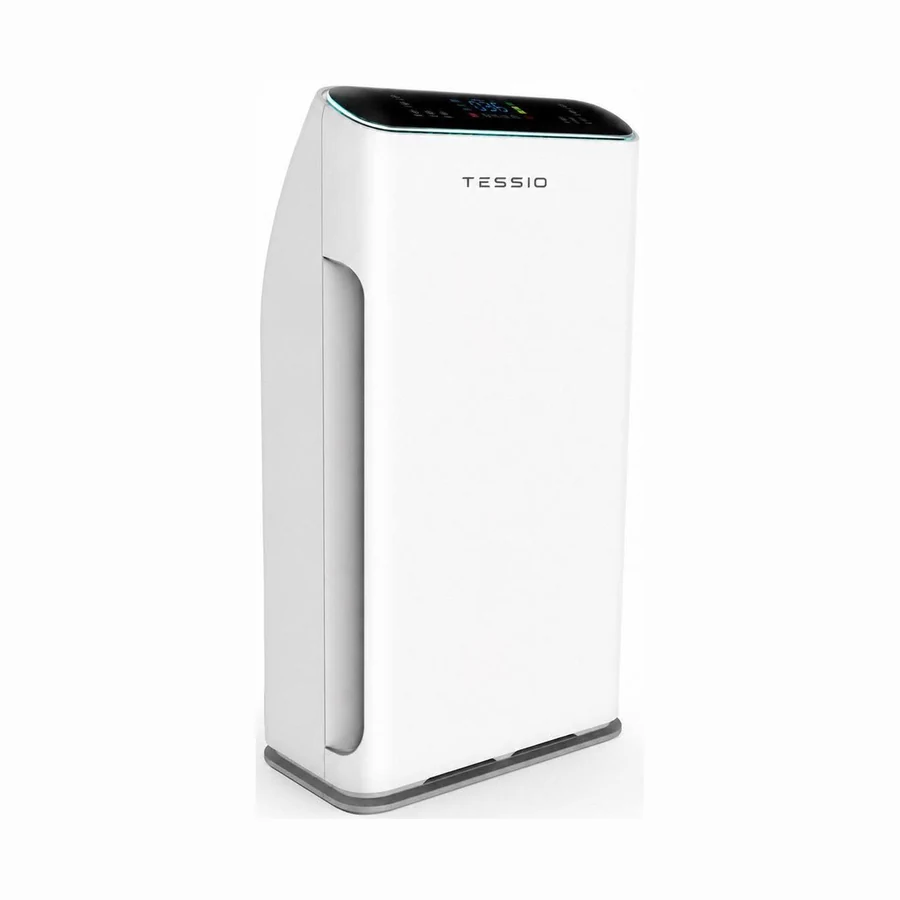
When choosing an air purifier, the first number to look at is not the price — it is the CADR and the room area the unit can handle.
What CADR means
CADR stands for Clean Air Delivery Rate, measured in cubic metres per hour. It tells you how much filtered air the unit delivers in an hour. The higher the figure, the faster the whole room is cycled through the filter.
For reference, the K06A delivers 280 m³/h, the K08D 488, and the A8 as much as 760.
And the room area?
The coverage figure on the box is derived from CADR, assuming a standard ceiling height and a sensible number of air changes per hour. If your ceiling is higher than usual, or several people use the room, choose a model rated slightly above your actual floor area.
The filter matters as much as the airflow
Strong airflow with a filter that is not fine enough simply blows dust around. Look for an H13-grade HEPA filter, which genuinely captures particles down to PM2.5.
One thing many buyers overlook is formaldehyde, which off-gasses from new furniture, paint and fittings. If you have just moved in or renovated, pick a model that states a formaldehyde removal rate — the K08D, for instance, removes 92% within an hour.
Do not forget noise
If the unit will run overnight in a bedroom, check the noise level at its lowest setting. Around 29 dB(A) is quieter than a whisper; above 55 dB(A) becomes noticeable in a quiet room.
In short
- Up to 40 sqm (bedroom, condo) — start around 280 CADR
- 40–70 sqm (living room) — look for 480 CADR or above
- One unit for the whole house — 700 CADR or above
- Recently renovated — check the formaldehyde removal rate
- Bedroom use — check the minimum noise level
Still unsure? Message @tessio369 with your room size and how you plan to use it, and we will compare models for you.