Induction or infrared? How the two cooktops differ
The two work on different principles, take different cookware, and suit different kinds of cooking.
When switching from gas to electric, the first question is usually whether to choose induction or infrared. The answer depends on how you cook and what cookware you already own.
How induction works
Induction creates a magnetic field that heats the base of the pan itself, so heat is generated in the cookware rather than on the cooktop. It heats very quickly, holds temperature precisely, and the surrounding surface stays cooler — safer with children in the house.
The limitation is that cookware must contain iron. The quick test is to hold a fridge magnet to the base; if it sticks, it will work. Clay, glass and plain aluminium pans will not.
How infrared works
Infrared uses a heating element beneath the glass that radiates heat upward — similar in principle to a traditional electric hob, but faster. The clear advantage is that it works with any cookware: clay, glass, stainless or aluminium.
The trade-off is that the surface does get genuinely hot and needs to cool before wiping, and temperature control is slightly less fine than induction.
So which should you pick?
If you cook Thai food that needs high heat and frequent adjustment, induction suits you better. If your kitchen has clay pots for curries or a shabu pot, infrared is more flexible.
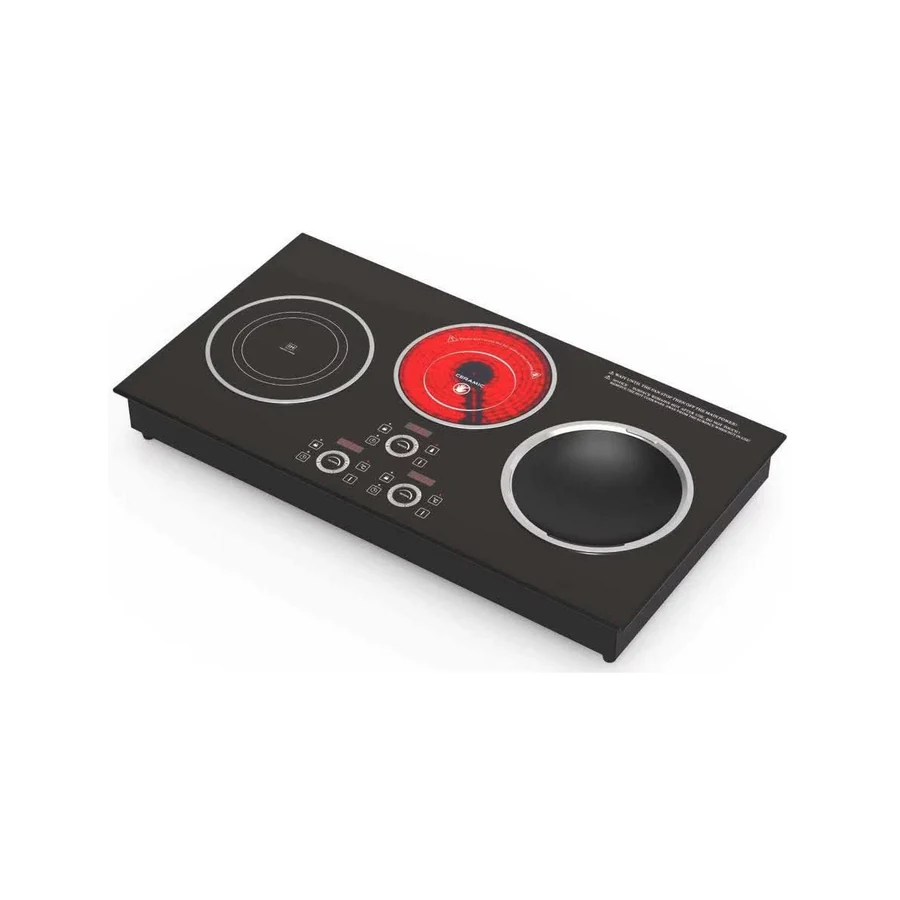
A third option is a cooktop with both, such as the AT-999: two induction zones for everyday frying and boiling, plus an infrared centre zone for cookware magnets will not grip, with 3,400 W total output.
Check before installing
- The counter cut-out size — the AT-999 needs 680 × 380 mm
- Wiring and breaker capacity for the cooktop’s total load
- Safety features such as child lock and automatic overheat cut-off
Unsure whether your kitchen can take one? Send a photo of the counter to @tessio369 on LINE.